
Relocating a factory is one of the most complex projects a business can undertake. It involves heavy machinery, sensitive equipment, strict timelines, regulatory compliance, and the risk of costly downtime. A poorly managed move can disrupt operations for weeks — or even months.
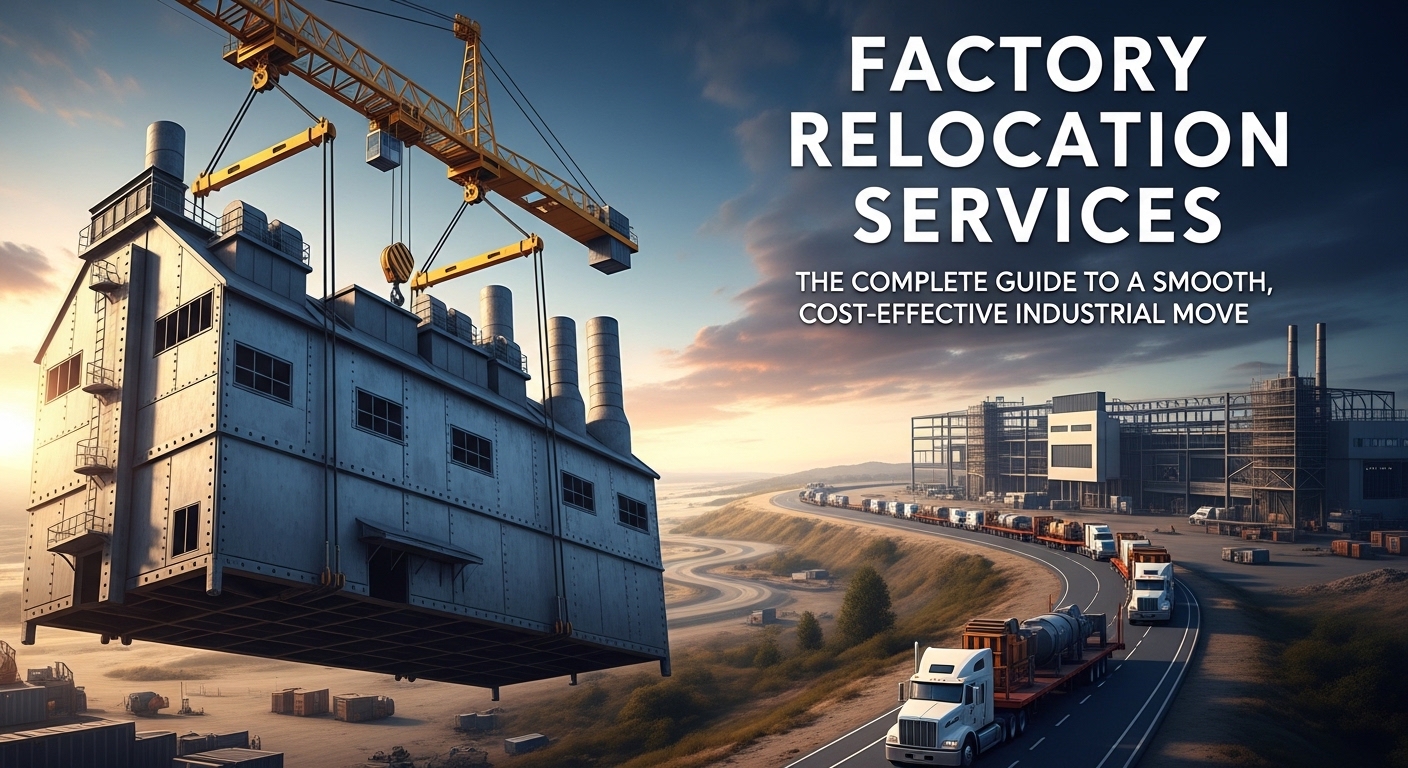
That’s where factory relocation services come in. These specialized industrial moving solutions are designed to handle everything from dismantling production lines to reinstalling machinery at the new site with minimal disruption.
In this guide, you’ll learn how factory relocation works, what it costs, how to reduce risks, and how to choose the right industrial relocation partner for your business.
What Are Factory Relocation Services?
Factory relocation services are professional solutions that help businesses move manufacturing plants, production facilities, warehouses, and heavy industrial equipment from one location to another.
These services typically include:
-
Site assessment and relocation planning
-
Machinery dismantling and reinstallation
-
Heavy equipment transportation
-
Industrial packing and crating
-
Electrical and mechanical reconnection
-
Project management and compliance coordination
Unlike standard commercial moving services, industrial relocation requires engineering expertise, certified rigging teams, and detailed logistical coordination.
Why Businesses Relocate Factories
Companies relocate factories for many strategic reasons. Understanding the motivation behind your move helps shape the relocation plan.
1. Expansion and Growth
When production capacity outgrows the existing space, relocation becomes necessary to support scaling operations.
2. Cost Reduction
Many companies move to regions with:
-
Lower labor costs
-
Reduced property taxes
-
Affordable industrial real estate
-
Better supply chain access
This often ties into broader manufacturing relocation strategy decisions.
3. Operational Efficiency
Relocating closer to suppliers, ports, or customers can significantly reduce transportation costs and improve delivery speed.
4. Regulatory or Compliance Needs
Environmental regulations or zoning changes sometimes require businesses to relocate operations to compliant industrial zones.
Key Components of Professional Industrial Relocation
Relocating a factory is not simply about moving machines. It is a structured, multi-phase process.
1. Pre-Move Assessment and Engineering
Before any equipment is touched, experts conduct:
-
Structural site evaluation
-
Equipment mapping
-
Utility requirement analysis
-
Risk assessment
-
Production downtime estimation
This phase ensures a safe and realistic relocation timeline.
2. Machinery Dismantling Services
Heavy industrial equipment often requires:
-
Electrical disconnection
-
Hydraulic system drainage
-
Precision dismantling
-
Labeling for reassembly
Professional machinery dismantling services reduce the risk of misalignment or damage.
3. Heavy Equipment Transportation
Transporting industrial machinery requires:
-
Specialized trailers
-
Rigging systems
-
Crane services
-
Route planning permits
This stage is critical for oversized or high-value equipment.
4. Factory Equipment Installation
At the new site, teams handle:
-
Positioning and leveling machinery
-
Reconnecting utilities
-
Calibration and testing
-
Safety inspections
Precision alignment ensures production resumes without quality issues.
How Much Do Factory Relocation Services Cost?
The cost of factory relocation varies widely depending on:
-
Size of facility
-
Number of machines
-
Weight and complexity of equipment
-
Distance between locations
-
Required downtime speed
Typical Cost Factors
-
Engineering and planning fees
-
Rigging and crane rentals
-
Transportation permits
-
Skilled labor
-
Insurance coverage
-
Utility reinstallation
Large-scale industrial relocation projects can range from tens of thousands to several million dollars. However, a professional plan often reduces long-term losses by minimizing downtime.
For general cost planning insights, resources like Investopedia’s guide to business relocation planning can provide additional financial context.
How to Minimize Downtime During a Factory Move
Downtime is often the biggest concern. Every day production stops, revenue is lost.
Here are proven strategies to reduce downtime:
-
Phase the relocation – Move production lines in stages
-
Pre-wire the new facility before equipment arrives
-
Use experienced industrial project managers
-
Test systems before full production launch
-
Maintain backup production capacity if possible
Experienced factory relocation companies prioritize downtime reduction as a key performance metric.
Choosing the Right Factory Relocation Company
Selecting the right partner can make or break your relocation project.
What to Look For
-
Proven experience in industrial equipment relocation
-
Licensed and insured rigging professionals
-
Documented safety record
-
Transparent pricing structure
-
Dedicated project management team
-
Engineering support
You may also check industry associations such as the Specialized Carriers & Rigging Association (SC&RA) for certified providers.
Avoid choosing solely based on price. The lowest bid may lead to hidden costs, delays, or equipment damage.
Common Risks in Industrial Relocation
Even well-planned moves carry risks. Understanding them helps you prepare.
Equipment Damage
Improper handling can result in expensive repairs or calibration issues.
Safety Incidents
Heavy machinery relocation involves serious safety hazards.
Compliance Violations
Failing to meet environmental or zoning requirements can delay operations.
Production Delays
Unexpected technical issues during reinstallation can extend downtime.
A professional relocation strategy includes contingency planning to manage these risks.
International Factory Relocation
Global manufacturing shifts have increased cross-border factory relocations.
International relocation requires:
-
Customs documentation
-
Export/import compliance
-
Shipping container coordination
-
International heavy freight logistics
-
Local regulatory approval
If you are considering overseas relocation, review government trade compliance resources such as the U.S. International Trade Administration or equivalent national agencies for accurate regulatory guidance.
The Role of Project Management in Industrial Moves
Professional project management is essential in large factory relocations.
An experienced project manager coordinates:
-
Contractors
-
Engineers
-
Transportation teams
-
Utility providers
-
Safety inspectors
-
Facility managers
This centralized coordination prevents miscommunication and timeline conflicts.
Sustainability in Modern Factory Relocation
Sustainability has become a major consideration in industrial operations.
Relocation provides an opportunity to:
-
Upgrade to energy-efficient systems
-
Install renewable energy solutions
-
Optimize production layout
-
Improve waste management
Companies focusing on ESG (Environmental, Social, Governance) performance often integrate sustainability into their relocation strategy.
Step-by-Step Overview of the Relocation Process
Here’s a simplified roadmap:
-
Initial consultation and site survey
-
Engineering and cost estimation
-
Timeline development
-
Equipment labeling and dismantling
-
Transportation logistics
-
Facility preparation
-
Equipment installation
-
Testing and commissioning
-
Production restart
-
Post-move evaluation
Each step requires coordination and technical precision.
Why Professional Factory Relocation Services Matter
Attempting to manage an industrial relocation internally without expertise can lead to:
-
Extended downtime
-
Hidden costs
-
Safety violations
-
Equipment misalignment
-
Regulatory fines
Professional factory relocation services bring structured planning, technical expertise, and risk management that protect your investment.
Factory relocation is a complex, high-stakes process that demands careful planning and experienced execution. From machinery dismantling to final calibration, every step affects productivity, safety, and profitability.
By working with specialized factory relocation services, businesses can reduce downtime, control costs, and ensure a smooth transition to their new facility.
If your company is considering an industrial move, start by conducting a professional assessment and consulting experienced relocation experts. Planning early is the key to protecting your operations and achieving long-term success.
FAQ
1. How long does factory relocation take?
The timeline depends on facility size and complexity. Small moves may take weeks, while large industrial relocations can take several months.
2. What is the biggest risk in factory relocation?
Extended downtime and equipment damage are the most common risks without proper planning.
3. Can production continue during relocation?
In many cases, phased relocation allows partial production to continue, reducing revenue loss.
4. Do factory relocation companies provide insurance?
Reputable providers offer liability coverage and cargo insurance to protect equipment during transit.
5. How do I prepare my facility for relocation?
Start with a professional site assessment, inventory mapping, and a detailed relocation strategy developed with industrial experts.